
Fossils Between Deep Time and Desire
The ForgivenThis flow traces fossils as ancient life, feared supernatural forms, family livelihood, and objects transformed by wealthy collectors into commodities.
increasing Bearing strength in each event
 decreasing
Bearing strength in each eventdecreasingThe Desert’s Ancient Sea
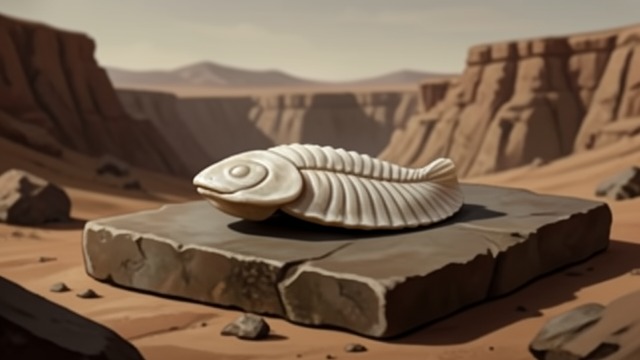
Life Embedded in Stone
David examines the trilobites and other specimens Driss collected and prepared. Their shapes suggest an ancient marine world that existed long before the human communities now living among the desert quarries.
The specimens are beautiful and unsettling to him, carrying a physical record of life that has become stone. He begins to imagine the Sahara as a former sea rather than as an empty landscape.
Deep Time and Human Scale
Geological time makes individual human lives appear brief, but the fossils are also the product of present-day labor. Driss’s daily work connected his life to objects far older than any person around him.
The encounter brings the ancient and the contemporary together. A fossil may outlast its maker, but its extraction and sale remain shaped by immediate human need.
Demonic Interpretations
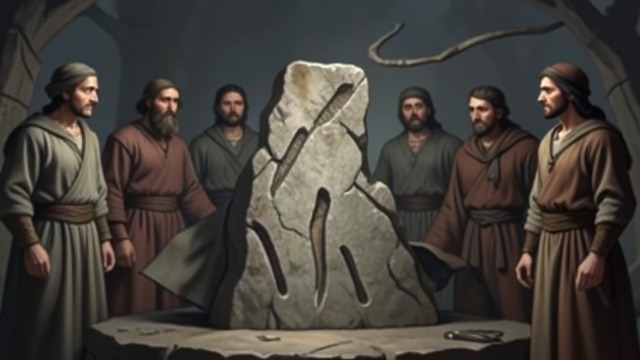
Fossils as Unearthly Forms
Some local people interpret the strange shapes of fossils as remains of demons or beings outside the created world. The belief reflects the specimens’ unfamiliar anatomy and their distance from ordinary living experience.
Driss and Ismael encounter these ideas within a community where fossil extraction is also a trade. Fear and commerce exist side by side rather than cancelling one another out.
Meaning Changes with the Viewer
A collector may prize the same fossil as a rare object, while a local observer sees something spiritually troubling in its appearance. Neither meaning is detached from the people who encounter it.
The novel uses the fossils to show that objects do not carry a single fixed significance. Their meaning changes across belief, livelihood, scientific curiosity, and desire.
Work Made into Collectibles
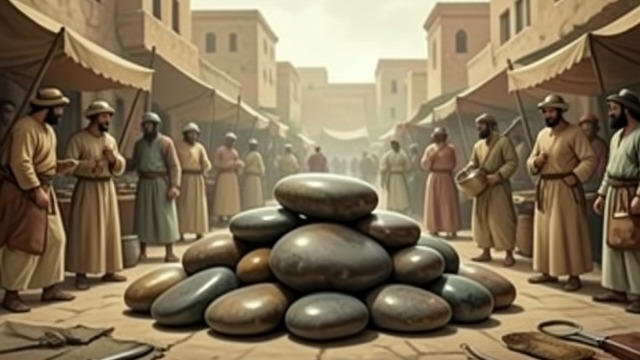
A Local Economy
David sees children, workers, and traders around the fossil trenches. Specimens are removed, prepared, sold, and transported through a chain that connects remote communities to buyers in Europe and the United States.
The trade offers necessary income but sends its most valuable objects far from the place where they were dug. The workers’ labor is difficult and the rewards are uneven.
A Decorative Afterlife
A fossil can become a tabletop or display object in a wealthy home after passing through many hands. Its polished appearance conceals the labor and poverty attached to its extraction.
David recognizes the disparity but also admits that his own comfort depends on other forms of poorly paid work. The insight complicates his judgment without making the unequal trade disappear.
The Elvis as Hope
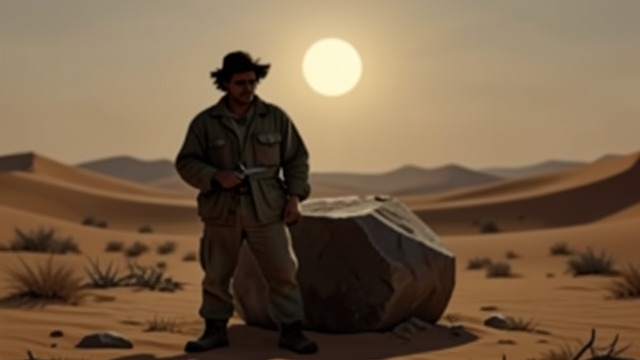
A Fossil with a Name
Abdellah identifies the rare specimen as the Elvis and explains that Driss took it in the hope of selling it. The name reflects the playful commercial language through which a prehistoric object becomes recognizable to modern buyers.
For Abdellah, the fossil is also a record of his son’s last attempt to escape. He imagines that a successful sale might have given Driss money for a different life.
An Unfinished Possibility
The Elvis cannot explain why Driss made every choice he did, and a successful sale would not necessarily have secured his future. Yet the object gives grief a particular point of focus.
Through the fossil, a dead young man’s desire becomes visible without becoming fully knowable. The specimen survives as both commodity and reminder of a life that did not reach its intended destination.
The Fossil at the End
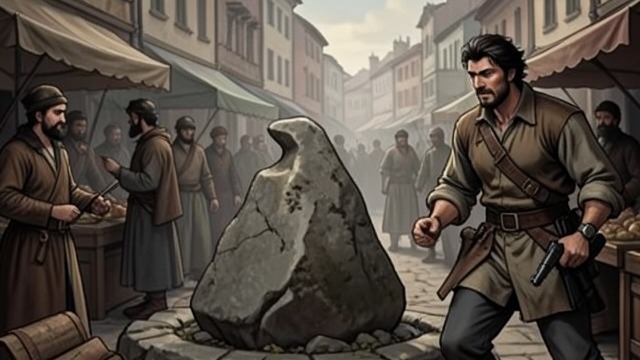
A Specimen Reappears
Ismael approaches the Hennigers with a Psychopyge fossil, repeating the appearance of a roadside seller. The object briefly signals commerce before the concealed pistol changes the meaning of the encounter.
The fossil recalls the earlier plan shared by Ismael and Driss. Its presence links the final violence to a livelihood and an ambition that had already turned dangerous.
Ancient Matter and Immediate Violence
The fossil itself persists across generations, but the human relationships around it have been altered by poverty, migration, accident, and loss. It cannot bear the responsibility for what people do with it.
The final scene makes the contrast stark: an ancient object is held up in the present as human lives move toward an irreversible end. Deep time offers no rescue from immediate moral consequence.
Sunday afternoon in Driss’s room
During Ismael and Driss’s conversations at the quarry
Early Sunday near the quarries below Jbel Issomour
The night Abdellah shows David the stolen specimen
Monday night at the final roadside stop
